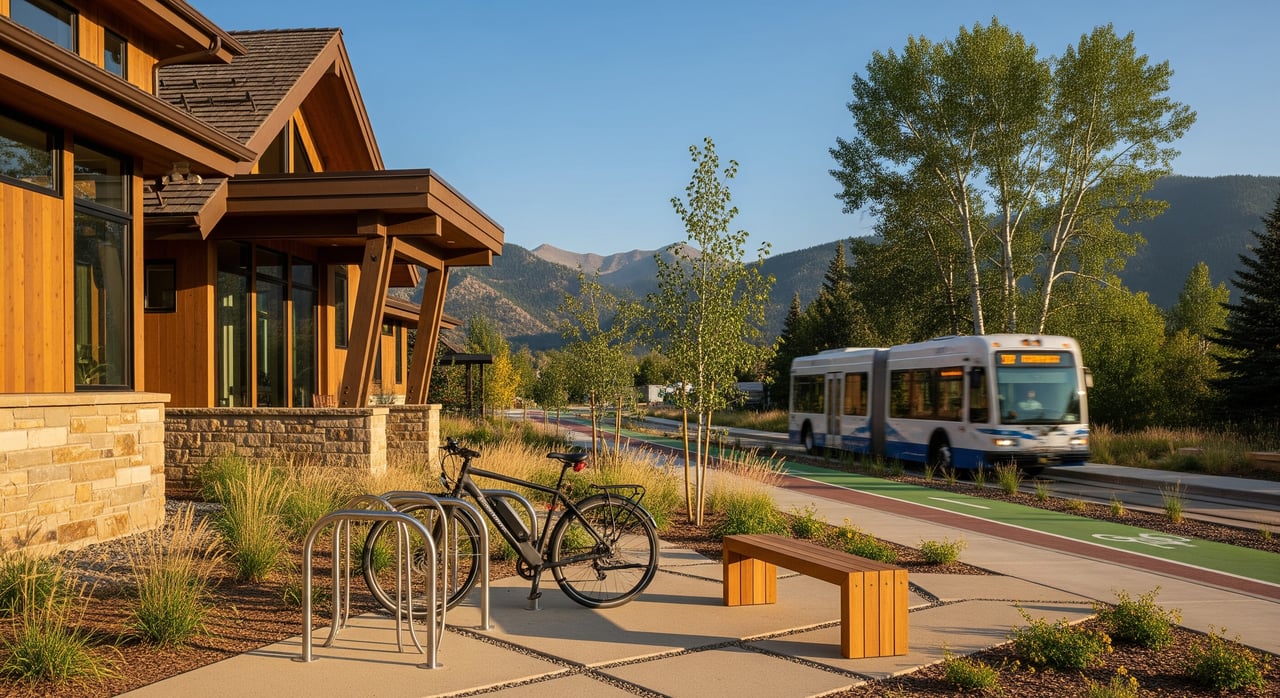
Do buyers keep asking how long it takes to get to CSU or Old Town without driving? You are not alone. In Fort Collins, proximity to Transfort’s MAX bus rapid transit and the city’s trail network can widen your buyer pool and help your listing stand out. In this guide, you will learn how to measure MAX access and bike routes, present accurate facts in your marketing, and answer common questions with confidence. Let’s dive in.
Why MAX and bikes help you sell
Transit and trail access is a real, measurable amenity. MAX offers reliable, frequent service along Fort Collins’ Mason Corridor with direct connections to downtown, Colorado State University, and major employment and retail nodes. Many buyers value a shorter, lower-stress commute and the option to live car-light.
When you show verified walking times to MAX and safe, convenient bike routes, you appeal to students, downtown workers, and outdoor-focused buyers. Families often look for easy trail access for recreation, while eco-minded buyers want the combined power of frequent transit and bike infrastructure. Measured facts beat vague claims every time.
What buyers want to know
Transit essentials to include
- Nearest MAX stop name and exact distance in miles or meters.
- Walking time and route details to the stop.
- Scheduled frequency during peak and off-peak hours, plus first and last trips.
- Direct destinations served such as downtown and CSU.
- Stop amenities like shelters or real-time arrival signs.
Bike and trail essentials to include
- Nearest trail name and trailhead distance (for example, Poudre River Trail, Spring Creek Trail, Fossil Creek Trail).
- Whether the route is mostly off-street trail, protected lane, bike boulevard, or painted lane.
- Estimated bike time and distance to key destinations along a safe route.
- Seasonal notes like snow-clearing priority on specific paths.
- Available bike parking or storage at the property and near common destinations.
Verify MAX access step by step
Use more than one tool and document your method and date. Buyers respond to specifics they can verify.
- Identify the closest stop
- Use Transfort’s official route maps and schedules to confirm MAX stop names and locations.
- Cross-check in a map tool to see the path from the property to the stop.
- Measure the walk
- In a routing app, select walking mode and map the safest, most direct route to the MAX stop.
- Note distance and time. Label it clearly with the tool and date checked.
- Check frequency and span
- From Transfort schedules, list scheduled headways for peak and off-peak windows and first and last trips.
- Buyers care most about weekday and early evening service. If weekend service differs, mention it briefly.
- Note stop amenities
- Confirm if the stop has a shelter, real-time arrival screen, lighting, and bike racks or lockers.
- If you verify on site, include that in your notes and photos.
Tip: Be conservative and clear about how you measured. For walking catchments, 400 meters (about one quarter mile) is a common standard for “walkable to transit.” For high-capacity service like BRT, up to one half mile is often reasonable, but always share your method.
Map and measure bike routes
Help buyers picture a safe, comfortable ride to daily destinations. A clear bike route and time estimate adds real value.
- Choose the safest route
- Check the City of Fort Collins trail and bike maps to identify multi-use trails, protected lanes, and bike boulevards.
- Favor routes that minimize high-traffic crossings and use separation from cars when available.
- Measure time and distance
- In a routing app, use bike mode from the property to your destination (downtown, CSU, park, grocery).
- A comfortable bike commute for many riders is 5 to 15 minutes, roughly 1.5 to 3 miles depending on route and rider. Provide both minutes and miles.
- Add trail and facility context
- Name the specific trail or facility type along most of the route. Example: “Primarily off-street via Spring Creek Trail” or “Protected lanes on key segments.”
- If the city prioritizes the route for snow-clearing, note that for year-round usability.
- Verify on site when possible
- A quick test ride helps you confirm intersection quality, lighting, and wayfinding.
- Take photos at the property, at the trail entrance, and at the MAX stop.
Listing-ready statements buyers trust
Use short, factual bullets with your measurement method and date. Here are templates you can adapt:
- “0.3 mile (about a 6-minute walk) to the nearest Transfort MAX stop (route measured in walking mode, checked MM/DD/YYYY).”
- “Direct MAX service to Colorado State University and downtown (schedule verified MM/DD/YYYY).”
- “1.2 miles (about an 8-minute bike) to downtown via the Poudre River Trail, primarily off-street multi-use path (checked MM/DD/YYYY).”
- “Protected lanes on [Street Name] plus bike racks at the corner transit stop (verified MM/DD/YYYY).”
- “Secure bike storage in the garage and a visitor bike rack on site.”
Keep the phrasing objective. Avoid superlatives like “best access.” Do not claim “on MAX” unless the property is literally at a MAX stop.
Create simple visuals that convert
A small visual package can answer buyer questions before they ask and keep your listing top of mind.
- One-panel map showing the property, the nearest MAX stop, and the closest trail segments. Add 5, 10, and 15-minute walking or biking isochrones if you have the tools.
- Three photo angles: the walking path to the stop, the stop itself, and the nearest trail entrance. Include clear captions with distances and times.
- A short fact sheet that mirrors your listing bullets and includes tool names and the date checked.
If you publish digital materials, add concise alt text and clear captions. This helps all buyers, including Deaf and Hard-of-Hearing clients who rely on accessible, direct information.
Accuracy and compliance checklist
Before you go live, run through this list so your claims are verifiable and MLS compliant.
- Measure walking and biking routes with at least one mapping tool, and time them on site if possible.
- Capture PDFs or screenshots of the MAX stop, schedule, and trail route with dates noted.
- Confirm the exact stop name and service frequency on Transfort’s official materials.
- State distance and time together, plus the tool and date checked.
- Include facility types: sheltered stop, real-time signs, protected lanes, off-street trail.
- Avoid subjective language and absolute promises. Use neutral, factual statements.
- If you use Walk Score or Bike Score, include the source and date. Treat scores as context only.
Who values this the most
You do not need to guess which buyers will care. Here is how to tailor your bullets by audience while staying factual.
- Students and CSU staff: Emphasize walk time to MAX, direct service to campus, and bike parking at the stop or on campus.
- Downtown and corridor workers: Highlight peak-hour frequency, door-to-door travel time, and real-time signs at the stop.
- Active families: Focus on trail proximity, off-street segments, parks reachable within a short ride, and safe crossings.
- Car-light and eco-minded buyers: Combine MAX frequency, reliable bike routes, and local amenities reachable by foot or bike.
Present it at showings
Bring a one-page handout with the same bullets that appear online. Keep it simple and consistent with your listing copy.
- Property-to-MAX measurements with route description and date checked.
- Bike route maps to downtown and CSU with minutes and miles.
- Notes on trail names, facility types, and any secure bike storage at the property.
- Photos and captions that match your facts.
This gives buyers a clear, trustworthy picture of everyday life in the home, not just a marketing line.
Pro tips for strong positioning
- Be conservative with times so buyers are delighted, not disappointed.
- Include both imperial and metric distances if you have room. Many transit users are familiar with meters.
- If your property includes bike storage or a small workbench, list it. Commuters notice.
- If regional buses or park-and-ride connections are nearby, note the connection point and typical direction of travel.
Work with a local, accessibility-first team
You deserve listing marketing that is accurate, inclusive, and compelling. Our approach blends deep Front Range expertise with measurement-first marketing and ASL-fluent service for Deaf and Hard-of-Hearing clients. We help you verify MAX access, map bike routes, and present clean, compliant facts that broaden buyer appeal and build trust.
Ready to position your Fort Collins home for today’s transit- and trail-savvy buyers? Schedule an ASL-friendly consultation with Unknown Company.
FAQs
How do I measure walking time to a MAX stop for my Fort Collins listing?
- Use a routing app in walking mode from the property to the nearest MAX stop, record distance and minutes, and note the tool and date checked for your listing bullet.
What is a good walking distance to transit in Fort Collins?
- A common standard is about 400 meters (one quarter mile) for “walkable to transit,” with up to one half mile often used for higher-capacity BRT stops if you explain your method.
How should I describe MAX service frequency in my listing?
- Cite the Transfort schedule with peak and off-peak headways and include the verification date, focusing on weekday and early evening service that most buyers use.
How do I present bike access to downtown or CSU accurately?
- Map a safe bike route using city trail and bike maps, provide minutes and miles, name the trail or facility types used, and note the date you measured.
What should I say about winter biking in Fort Collins?
- Reference whether the specific trail or street is prioritized for snow-clearing per city maintenance information and include separation from traffic along the route.
Can transit and trail access replace car ownership for buyers?
- Stay factual by describing travel times, service frequency, and nearby amenities reachable by foot or bike, and avoid promising a fully car-free lifestyle.