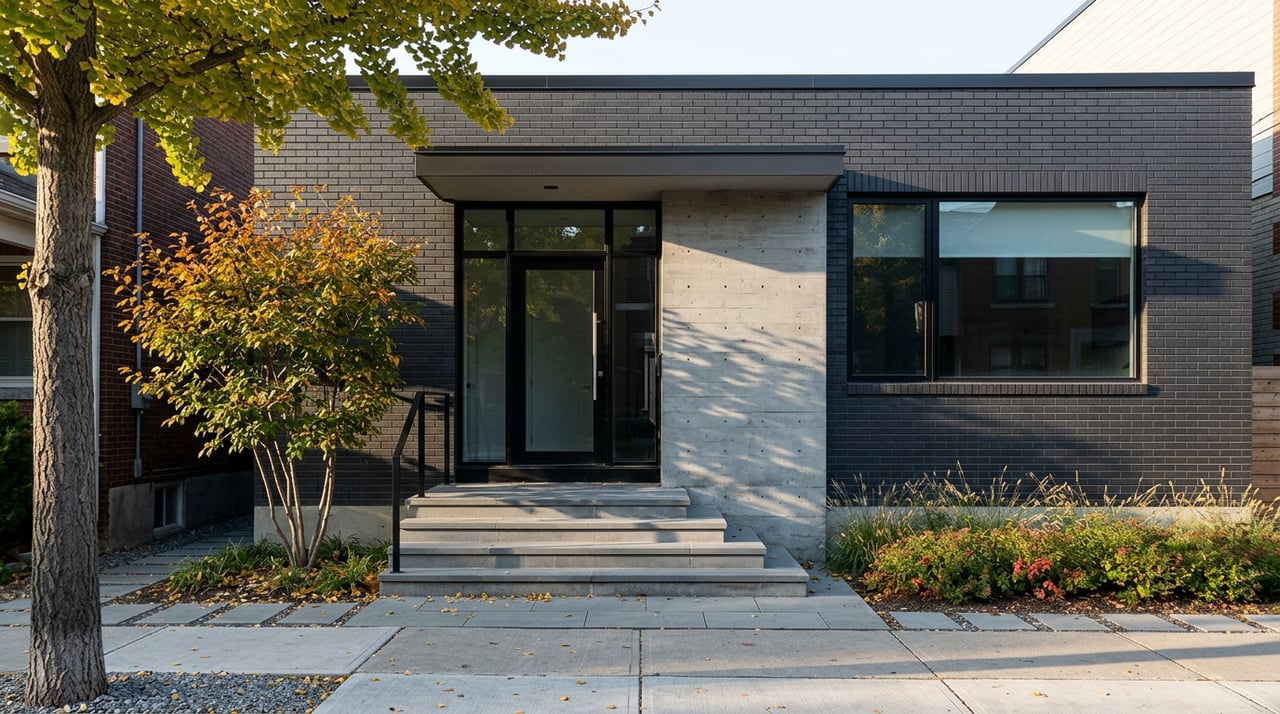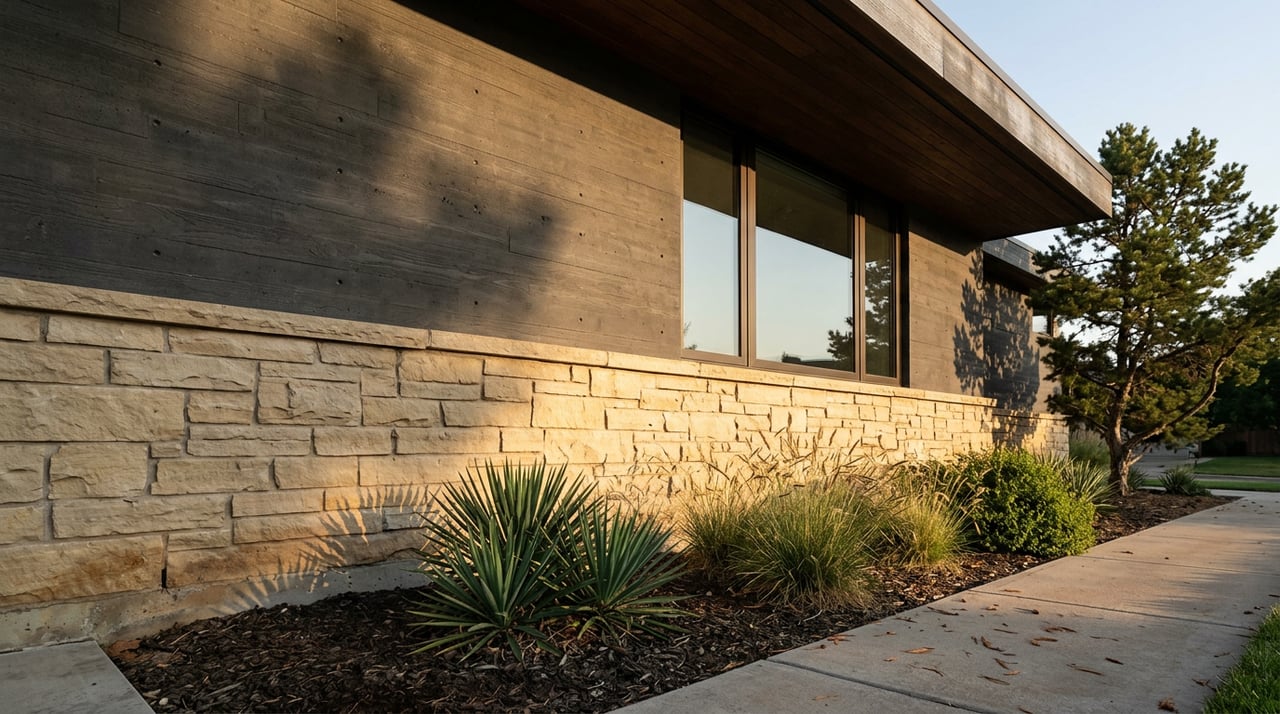
Buyers touring Castle Rock often walk into a five-year-old townhome in Crystal Valley Ranch and relax. New paint, new HVAC, new everything, surely new means safe. That instinct is backwards here. The subdivisions that make up most of Castle Rock's housing stock, Founders Village, The Meadows, Castlewood Ranch, Crystal Valley Ranch, Maher Ranch, Cobblestone Village, and Castle Oaks at Terrain, were built during exactly the window when the region's expansive clay soils were doing the most documented damage to slabs and foundations. In Castle Rock, the newer the subdivision, the more likely it is that it belongs to the era with the movement history, not the era after builders solved the problem.
That reframing matters because it changes who should be asking the soils question and when. It is not a due diligence step reserved for buyers eyeing a 1970s ranch. It is a line on the Colorado disclosure form that applies just as directly to a 2004 build in The Meadows as it does to anything built before code updates existed.
The Line on the Form Most People Skim
Colorado's Seller's Property Disclosure form, the one every listing agent hands a seller before a home goes live, opens its general disclosures section with a single question: has the seller ever had written reports of any building, site, soils, water, sewer, mold, or engineering investigation on the property, and if so, provide copies. It sits at the top of the form, before appliances, before roof age, before HVAC condition.
Sellers tend to read that line the way they read a terms-of-service agreement. It gets a quick no and a signature. In Douglas County, that instinct is exactly backwards. The Colorado Real Estate Commission's own disclosure guidance specifically calls out soil conditions and structural defects as the kind of adverse material fact that must be disclosed whether or not the form technically prompts for it. A seller who had a structural engineer out five years ago for a hairline crack, got a clean letter, and never thought about it again still needs to produce that report if a buyer asks. The form runs on current actual knowledge, not on whether the problem was ever formally fixed.
Why This Isn't Theoretical in These Specific Subdivisions
Castle Rock's growth accelerated hard through the 1990s and 2000s, and nearly all of that construction sits on soils that Douglas County engineers and inspectors have flagged for decades as expansive clay, capable of swelling and shrinking with seasonal moisture in ways that put real pressure on slabs and foundation walls. Subdivision developments from that era show patterns ranging from cosmetic drywall cracking to slab heave severe enough that it has triggered class-action litigation against some builders.
That is not a general Front Range talking point applied loosely to Castle Rock. It is specific to the subdivisions that make up the bulk of the town's inventory, the same ones built under the metro district financing structure that funded infrastructure across Founders Village, Castlewood Ranch, The Meadows, Crystal Valley Ranch, Maher Ranch, Cobblestone Village, and Castle Oaks starting in the mid-1980s. A house in one of these communities is not exempt from the soils conversation because it was built in 2006 instead of 1976. It is arguably the reason the conversation needs to happen at all.
What Colorado Courts Have Already Decided
Colorado's disclosure law does not leave much room for a seller to argue they didn't realize a soil issue counted. In Cohen v. Vivian, a Colorado court held a seller liable for failing to disclose known soil issues that caused structural problems, treating it as exactly the kind of latent defect the disclosure statute exists to catch. The ruling drew a clear line: a problem hidden below grade, invisible to a buyer's walkthrough and often invisible to a standard home inspector, does not become optional to disclose just because it is hard to see.
This is the part sellers underestimate most. A cracked slab that got patched and painted over five years ago is not a closed chapter. If the seller knew about it, it is a current actual knowledge item, and Colorado case law backs a buyer's right to know about it before they sign, not after they notice a door that won't quite latch.
Standard Inspection or Structural Engineer, and What Each One Actually Tells You
Once a soils question comes up, whether from a disclosure answer, a visible crack, or just the age and location of the subdivision, buyers in Castle Rock generally choose between two paths.
| Standard home inspection | Structural engineer evaluation | |
|---|---|---|
| Typical cost | $500 to $800 or more, often bundled with radon and sewer scope | $400 to $700 as a standalone evaluation |
| What it catches | Visible cracking, door and window alignment, obvious drainage problems | Whether movement is active or historical, load-bearing risk, a documented basis for negotiation |
| Best used when | No visible signs, routine due diligence on any Castle Rock purchase | Any visible crack pattern, sloping floor, or disclosure that flags a past soils report |
The distinction is not about which one is more thorough in general. It is about which one gives a buyer something they can actually negotiate with. A general home inspector can flag a crack. A structural engineer can tell a buyer whether that crack reflects soil movement that has stopped or soil movement that is still active, and that distinction is the difference between a cosmetic repair credit and a real renegotiation of price.
The Radon Bundle Nobody Budgets For
Douglas County sits in the EPA's highest radon risk designation, and that holds true regardless of a home's age or construction quality. Because radon testing is often scheduled alongside the same inspection window as a soils or structural evaluation, buyers in Castle Rock frequently end up paying for both in the same due diligence period. It is worth budgeting for both from the start rather than treating radon as an afterthought once the soils question is already answered, since skipping one to save time on the other rarely saves money in the long run.
What This Means If You're Selling
If you own a home in Founders Village, The Meadows, Castlewood Ranch, Crystal Valley Ranch, Maher Ranch, Cobblestone Village, or Castle Oaks, the honest move is to pull any old inspection or engineering reports before you list, not after a buyer asks. If a past owner or builder addressed a soils issue, having that paperwork ready turns a potential disclosure fight into a routine document exchange. Sellers who wait for the question to come from a buyer's attorney are negotiating from a weaker position than sellers who hand over the file on day one.
What This Means If You're Buying
Treat the age of the subdivision as information, not reassurance. A 2005 build in one of these communities carries the same soils history as its 1998 neighbor. If the disclosure form comes back clean but the subdivision itself has documented movement patterns, a structural engineer's evaluation before you waive your inspection contingency is worth the few hundred dollars it costs, especially since it gives you a real number to negotiate with rather than a guess.
FAQ
Does a clean disclosure form mean the soil is fine? Not necessarily. The form only reflects what the current seller knows. A prior owner's engineering report, or a builder-era issue that was patched and never mentioned to the current seller, would not show up.
Is this only a concern for older homes? No. The specific subdivisions with documented soil movement in Castle Rock were built primarily in the 1990s and 2000s, which makes them some of the newer parts of town relative to the rest of the Front Range.
What should I ask for if a disclosure mentions a past soils report? Ask for the full report, not just a summary, and consider having a structural engineer review whether the movement it describes is historical or ongoing before you finalize your offer.
Selling or buying in one of Castle Rock's subdivision-era neighborhoods is not a reason to slow down, it is a reason to ask sharper questions earlier. If you want a second set of eyes on a disclosure form or help lining up the right inspection before you're under contract, Gallucci Homes offers an ASL-friendly consultation to walk through exactly what your specific subdivision's history means for your transaction.